← Projects / Florida Rocket Lab
Cold Flow Test Platform
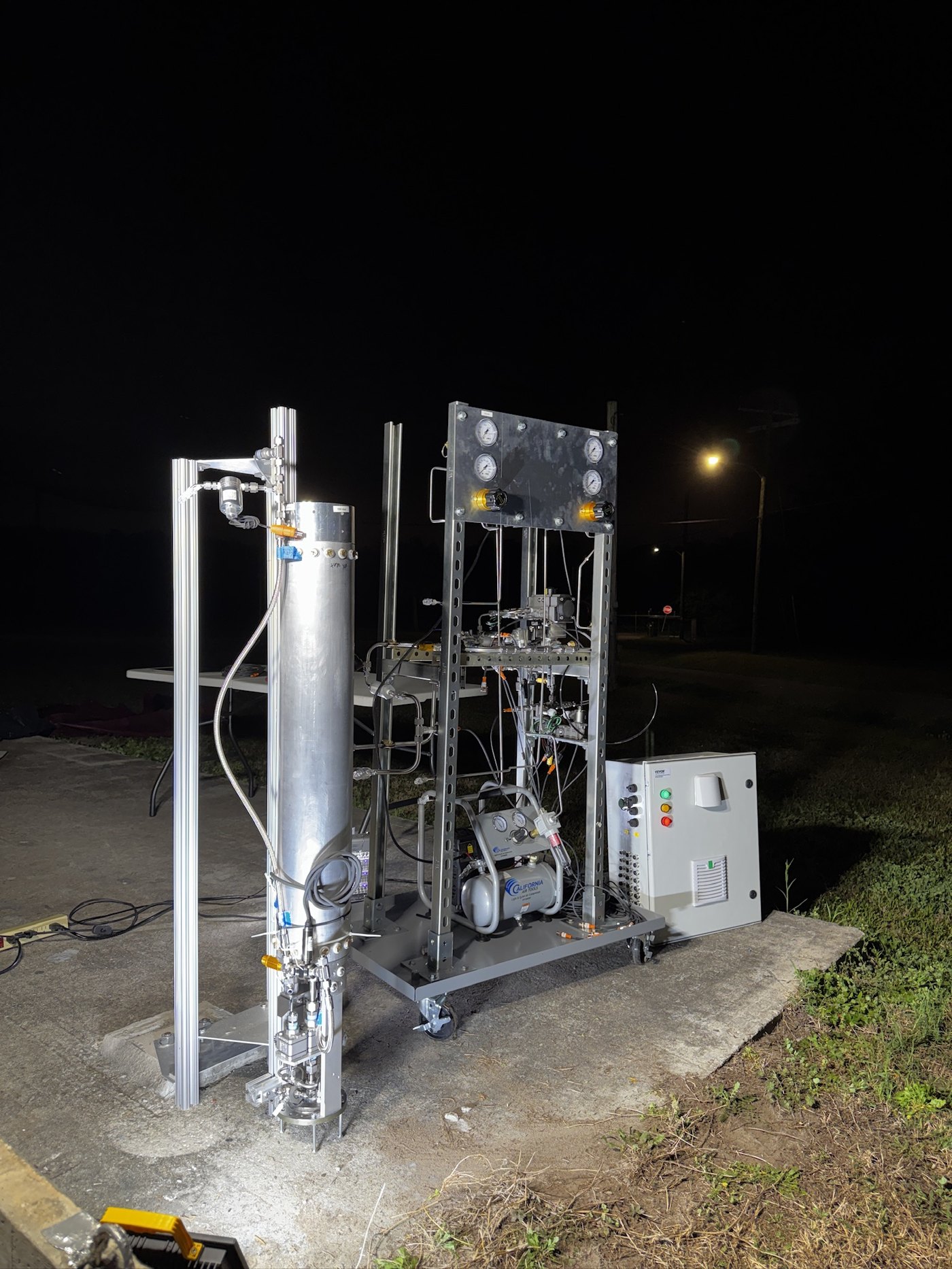
Cold flow testing is how you find out whether a propulsion system's plumbing behaves before there is anything combustible in it. That only works if you can see what happened, which makes the instrumentation as much of a design problem as the structure holding it.
Role
- Organization
- Florida Rocket Lab, University of Florida
- Role
- Flight Vehicles Engineer
- Duration
- August 2025 – present
- Tools
- Ansys Mechanical, Python, DAQ instrumentation
Instrumentation as the design problem
I designed a vertical integration and cold flow test platform that captures pressure, thermal, and vibration data from twelve individual sensors, and wrote the Python pipeline that synchronizes and processes those multi-channel streams into dashboards the team can actually read. Raw multi-channel DAQ output is close to useless in a debrief; the value is in getting every channel onto a common clock and putting the anomaly in front of the person who needs to see it.
I am continuing as test vehicles lead, running a team of four engineers to instrument and fly the subscale test vehicle.
Contact
- noah.haeske@ufl.edu
- Phone
- 407-705-9895
- Resume
- Download PDF